

Dealing With Criticism When Sharing Your Art Publicly
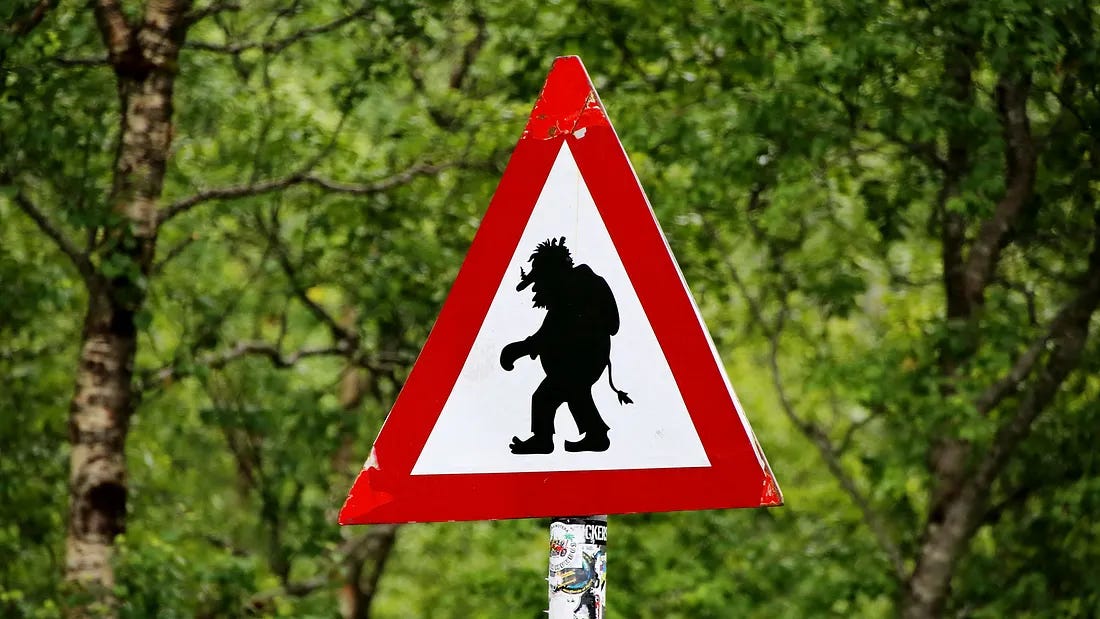
Because trolls don’t always stay under their bridge

Since becoming a full time writer, there’ve been many times when I’ve wanted to pack it all in. Give up, go back to working a ‘real’ job (though, who’d have me? is a common concern).
The reason? Almost exclusively, the commentary of other people.
Why would I give up my dream because of comments from a complete stranger? Especially when it’s so hard these days to differentiate between ‘real person’ and ‘bot’.
Because words hurt. Words are my tool, and they have the power to help others feel seen, to resonate across geography and time. They also have the power to cause great pain through negative and hurtful comments on things I’ve written.
Often, the comment isn’t even that nasty. It could be a small challenge of the stuff that’s come straight from my heart and soul. A sensitive soul, easily impacted by scrutiny. I have a writer’s soul, always reflecting and analysing my own thoughts and feelings.
If I wanted to be a writer, I needed to know if I could strengthen my ability to take criticism without losing my sensitive nature.
Dealing with public commentary is not a new phenomenon. It comes with the territory when your job is to create things and put them into the world for others to (hopefully, most of the time) enjoy. If I’m honest with myself, the threat of criticism is probably the biggest reason I didn’t become a full-time writer years ago. I’ve never been very good at being vulnerable or public-facing, other than in my younger days when I’d had plenty of booze to lubricate the confidence muscle.
I thought I was confident for years. My best friend once told me she envied how confident I was, especially when it came to chatting to strangers in bars and clubs. Making friends and romantic connections on nights out was my forte, but it wasn’t me bravely approaching strangers to start conversations, it was the alcohol. Take that away, and I’m just a shy little mouse who’d rather sit indoors by the fireplace (or, in modern times, one of Netflix’s wonderful selection of virtual fireplaces).
I’m delighted with this version of myself; settled down with a loving husband, adorable dog, home to call mine and career as a writer. For the first time in my life, I’m the most authentic version of myself I’ve ever been. But it’s made me realise I never actually learned confidence and I’m learning that from scratch now, aged almost 41.
At school, I was a typical ADHD girl. Teachers would say I was too smart to do this, that or the other, and berate me for losing concentration and staring out of the window imagining a different life.
My brain was always somewhere else and I developed a deep and lasting love of books and stories. No matter what was going on in the real world, I could open the pages of a book and be somewhere completely different. I could be in an American High School with my favourite companions, the Wakefield twins. Or I could be in a parallel universe, with Lyra and her daemon Pan, exploring the Far North and peeking into the city in the sky. I was always happiest when exploring a life other than my own.
There’s a memory of my primary school days in which I hid under my Dad’s car on the driveway because I’d somehow landed the lead role in the school play and had a tantrum on opening night because I didn’t want to do it. I hated being the centre of attention with everyone looking at me.
Many years later, I’d learn that adding alcohol made the opposite true, frequently dancing on tables (or wheelie bins, at one memorable festival).
Sharing my writing is pretty new. I’ve always been a writer in secret, but I only started sharing it publicly last year. Other than corporate writing like emails and product descriptions on Amazon, my writing — my soul writing — had never seen the light of day.
Imagine my delight, then, when people responded to my words in the most beautiful ways. Emails and messages appeared from people I’d never met telling me how much my writing resonated with them, how strongly they’d felt whatever emotion was central to the piece. It felt good, let me tell you. Really fucking good. So I did more of it, and soon I was confidently sharing my writing in multiple places and feeling like I was finally living my dream life.
Until the trolls came.
The first time a troll came for me was on a LinkedIn post about my non-parent business community, Flow. The post was about how everyone’s welcome at Flow, regardless of how they came to living a life without children. It kind of goes without saying, but is also in my website FAQs, that it’s not a place for parents. Most parents I speak to are completely understanding and recognise the need for such a community to exist — with 20% of people being childless, most parents know someone who fits the bill and want their friends or family members to feel supported.
But there was one guy who took great offence at my FAQ section which specifies that if a member of the group becomes pregnant, I’ll kindly ask them to leave as it would no longer be appropriate or relevant to them. He (yes, HE, a man who will never become pregnant) laid into me about breaching the Equality Act by excluding someone based on becoming pregnant.
This really got to me, and I sought advice from friends and other childless community hosts to help me understand if what he was saying was true. The real truth though, is that anyone who joins my community, be they childless or childfree, will understand the expectation for them to leave if they become pregnant. By being in the group in the first place, they know how painful it would be for another member to announce a pregnancy. It wouldn’t suit the group, it would be inappropriate, and it’d damn sure be uncomfortable for the member anyway!
But it got under my skin. He was articulate and convincing enough that it really set me back and I didn’t post about my community for ages afterwards for fear of it happening again.
Trolls don’t always look like trolls, you see.
They can look like reasonable, curious professionals who want to have a debate about something interesting, and I’m open to that. It’s only when you engage and get into the detail that you can see how troll-like they are.
This man was never going to join my community, and had no stake in it whatsoever. He was just looking to have a go at someone, for reasons I’ll never know.
When I started writing on Medium, I knew the risk of trolls would increase. I wrote a piece about cancel culture which I recognise is pretty controversial, but some of the comments on it were vile. Really nasty stuff, from exactly the kind of people I was calling problematic. It hurt. They were literally proving me right with their comments, and it still got to me and made me cry.
As I work on my current project, writing a novel, I’m conscious there will be people who won’t like my work. Most will never make themselves known, but some will. Because sometimes people get a kick out of making other people feel shitty (schadenfreude anyone?) It stands to reason, then, that I need to develop a thicker skin if I’m going to succeed as a published author in the future.
To achieve this, I’m going to take advice from one of my favourite authors, one of the most successful writers of our time who still gets trolled and deals with criticism all the time.
Remember: when people tell you something’s wrong or doesn’t work for them, they are almost always right. When they tell you exactly what they think is wrong and how to fix it, they are almost always wrong.
- Neil Gaiman
Writing is subjective, like all art. My words might resonate strongly with one person and open deep wounds for another. One of the human responses to pain is to attack, so if and when someone attacks my work, I’ll try to remember it’s simply not something this person can enjoy.
It’s not me, it’s them.
If I’m successful at writing a novel, landing an agent and getting published — in other words, if I achieve what I’m setting out to achieve — I’ll attract trolls, unhappy readers and people who just don’t like or get it. There’ll be one-star reviews, shitty remarks and moments where I question my ability to write at all. I hope they’ll be fleeting, and with any luck, far outweighed by readers who love my work, support and encourage me, and resonate with the stuff I create.
They’re who I’m writing for, not the trolls.
Thanks for reading, connect with me here.
My work is entirely funded by you, the readers. If you'd like to support me, consider buying me a coffee (it’ll be a hazelnut latte with coconut milk, if you’re interested!)
This story was originally published on Medium and is cross-posted here for a wider audience. View the original post here.